
When news broke about the United Flight UA109 diversion, many travelers saw only a headline: a transatlantic flight interrupted, a sudden change of course, and an unscheduled landing in Ireland. But behind that brief moment on flight-tracking apps lies a deeper story—one that reveals how layered decision-making, regulatory structure, human factors, and operational planning intersect thousands of feet above the Atlantic.
This wasn’t just a diversion. It was a real-time demonstration of how modern aviation is designed to respond to uncertainty without drama.
The Flight Plan: A Routine Transatlantic Crossing
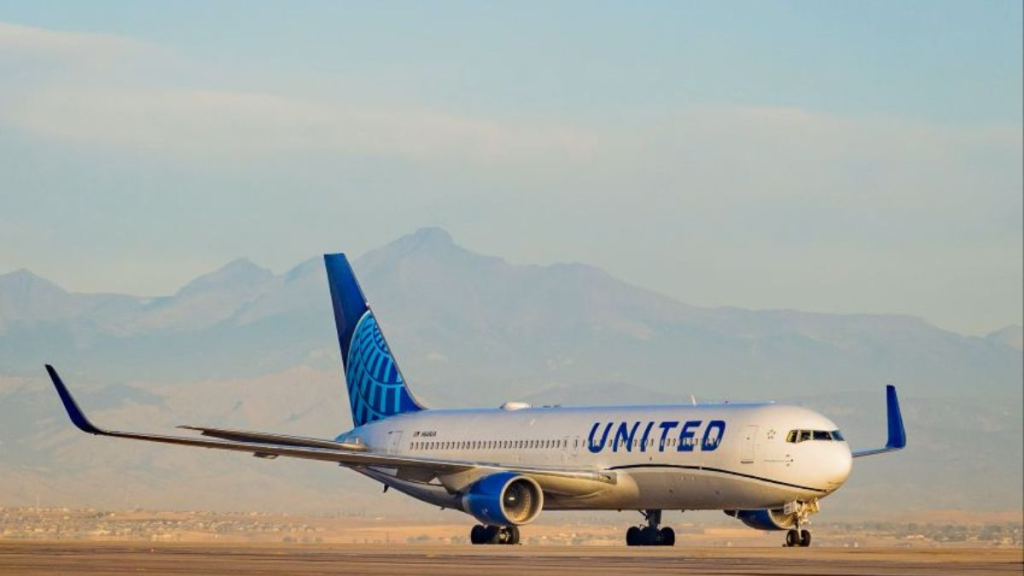
United Flight UA109 diversion is a regularly scheduled long-haul route operated by United Airlines, connecting Munich Airport with Washington Dulles International Airport. The route typically follows a carefully plotted North Atlantic track system, optimized daily based on winds, traffic flow, and weather patterns.
Transatlantic flights operate under Extended-range Twin-engine Operational Performance Standards (ETOPS), meaning they are always within a defined distance of a suitable alternate airport. Every point across the ocean is planned with contingencies in mind.
Passengers boarding UA109 likely expected the usual: dinner service, cabin dimming, a long night over the Atlantic, and a morning arrival in the United States. Instead, roughly three hours into the flight, the aircraft altered course and headed toward Ireland.
What Triggers a Diversion?
Contrary to popular belief, diversions are not rare. They are simply uncommon enough to attract attention. And most are not caused by catastrophic events.
Diversions typically occur for one of five reasons:
- Passenger medical emergencies
- Crew medical issues
- Mechanical irregularities
- Weather complications
- Security concerns
In the case of the United Flight UA109 diversion, the issue involved a crew-related medical situation. While it may sound minor compared to engine trouble or severe turbulence, aviation regulations treat crew fitness as a safety-critical matter.
Cabin crew are not just service providers; they are trained emergency responders. They manage evacuations, perform first aid, control cabin fires, and coordinate passenger safety during abnormal events. Aviation authorities such as the Federal Aviation Administration and the European Union Aviation Safety Agency mandate minimum active crew numbers based on aircraft type and passenger load.
If one becomes medically unfit to perform duties, the flight may no longer meet legal staffing requirements.
That alone can justify a diversion.
Why Dublin Was the Logical Choice
When United Flight UA109 diversion, it landed at Dublin Airport. This was not a random selection.
Dublin is one of the most strategically important transatlantic diversion airports for several reasons:
- It sits directly along North Atlantic tracks.
- It has long runways capable of handling wide-body aircraft.
- It maintains 24-hour operations and medical facilities.
- It is a designated ETOPS alternate for many U.S.–Europe routes.
- It has strong U.S. preclearance infrastructure, simplifying onward travel if needed.
When flight crews evaluate diversion options, they consider fuel state, distance, weather conditions, runway compatibility, maintenance support, and medical availability. Dublin often emerges as the optimal choice for flights positioned mid-Atlantic between mainland Europe and North America.
The decision is rarely emotional. It is mathematical, procedural, and systematic.
The Psychology of a Mid-Air Turnaround
For passengers watching the aircraft icon pivot westward on a flight tracker, the experience can feel dramatic. But in the cockpit, the shift is procedural.
Pilots work through structured checklists and consult dispatch teams on the ground. Modern airliners are in constant communication with airline operations centers that monitor weather, maintenance data, crew legality, and routing alternatives in real time.
When a medical issue arises involving crew, pilots must assess:
- Is the affected crew member able to continue duties safely?
- Does the aircraft still meet regulatory staffing requirements?
- How far is the nearest suitable airport?
- What are the operational implications of continuing?
Continuing across the Atlantic without full regulatory compliance is not an option. Aviation safety is built on conservative decision-making. The philosophy is simple: land early, resolve the issue, and proceed safely.
Operational Impacts Behind the Scenes
A diversion sets off a cascade of coordinated actions:
1. Air Traffic Control Coordination
Controllers reroute traffic, create spacing for descent, and coordinate emergency services if necessary.
2. Ground Handling Preparation
Airport authorities prepare gates, fuel trucks, and medical teams.
3. Dispatch Recalculation
Airline dispatch recalculates fuel loads, updated flight plans, and crew duty times.
4. Passenger Communication
Cabin announcements must be timely, clear, and reassuring.
5. Regulatory Compliance Review
Crew duty time limits are reassessed to ensure legality for continuing the journey.
Each step is part of aviation’s layered safety system. No single person makes the decision alone; it is a coordinated ecosystem response.
Human Factors: The Often Overlooked Dimension
Aviation safety discussions often focus on mechanical reliability. Yet human factors are equally important.
Crew members endure long duty periods, circadian rhythm disruptions, varying cabin pressures, and physically demanding work. On long-haul flights, fatigue management and health monitoring are critical components of safety oversight.
A medical issue affecting a flight attendant—even something that might appear minor on the ground—can compromise emergency readiness in the air. Regulations therefore treat crew health conservatively.
This reflects a broader truth: aviation safety is not about reacting to disasters. It is about preventing small problems from becoming larger ones.
Passenger Experience During Diversions
For travelers aboard United Flight UA109 diversion, the diversion likely introduced uncertainty. Questions arise quickly:
- Will we deplane?
- Will we miss connections?
- Is the aircraft safe?
- How long will this take?
In many United Flight UA109 diversion, passengers remain onboard while refueling and paperwork are completed. If the stop is brief and crew legality allows continuation, the journey resumes with only a moderate delay.
Airlines prioritize minimizing disruption while maintaining compliance. From a customer perspective, the experience may feel inconvenient. From a safety standpoint, it is evidence that the system works exactly as intended.
The Economics of an Unscheduled Landing
United Flight UA109 diversion are expensive.
Costs can include:
- Additional fuel burn
- Airport landing fees
- Ground handling charges
- Crew time adjustments
- Potential passenger compensation
- Rebooking logistics
For a wide-body aircraft, a single diversion can cost tens of thousands of dollars. Airlines do not make these decisions lightly.
That United Flight UA109 diversion underscores a key principle: safety overrides cost considerations every time.
Social Media and Speculation
In today’s digital environment, flight tracking platforms allow the public to observe aircraft movements in real time. A sudden U-turn quickly generates online speculation.
Mechanical failure? Security threat? Severe turbulence?
In many cases, the truth is far less dramatic. Aviation professionals often note that United Flight UA109 diversion are evidence of caution—not crisis.
The transparency of modern tracking tools is valuable, but it also amplifies incomplete narratives. The United Flight UA109 diversion illustrates how quickly routine safety decisions can become trending topics.
ETOPS: The Invisible Guardian of Oceanic Travel
The success of the United Flight UA109 diversion also highlights the importance of ETOPS planning.
Before departure, flights across oceans designate multiple alternate airports within reachable distance at all times. These alternates are chosen based on weather forecasts, runway performance, and emergency capability.
This means that even in the vast emptiness of the Atlantic, aircraft are never truly isolated. The planning happens before takeoff, not after trouble begins.
ETOPS transformed long-haul aviation, allowing twin-engine aircraft to safely operate over extended oceanic routes. The United Flight UA109 diversion demonstrates the framework functioning exactly as designed.
What This Incident Teaches About Modern Aviation
The key takeaway from the United Flight UA109 diversion is not disruption. It is resilience.
Modern aviation operates on three foundational principles:
- Redundancy – Multiple backups exist for systems, airports, and procedures.
- Regulation – Strict staffing and safety rules leave little room for improvisation.
- Proactivity – Early intervention prevents escalation.
The aircraft landed safely. The issue was addressed. The flight continued. Passengers arrived later than planned—but safely.
In aviation, that outcome defines success.
A Broader Perspective on Safety Culture
Commercial aviation remains one of the safest forms of transportation in the world. That reputation is maintained not by luck, but by conservative decision-making and constant oversight.
When a United Flight UA109 diversion occurs due to a crew medical situation, it reinforces a powerful message: safety culture applies to people just as much as machines.
No checklist is ignored. No regulation is bypassed. No health concern is dismissed simply because it seems small.
Every precaution matters at 35,000 feet.
Conclusion: A Routine Event with Extraordinary Precision
The United Flight UA109 diversion may have appeared dramatic to observers tracking the aircraft’s path across the Atlantic. In reality, it was a controlled, well-executed response within a robust safety framework.
A crew health issue triggered regulatory considerations. Pilots evaluated options. Dispatch coordinated. Dublin provided a strategic landing point. The United Flight UA109 diversion resumed with a manageable delay.




Leave a Reply